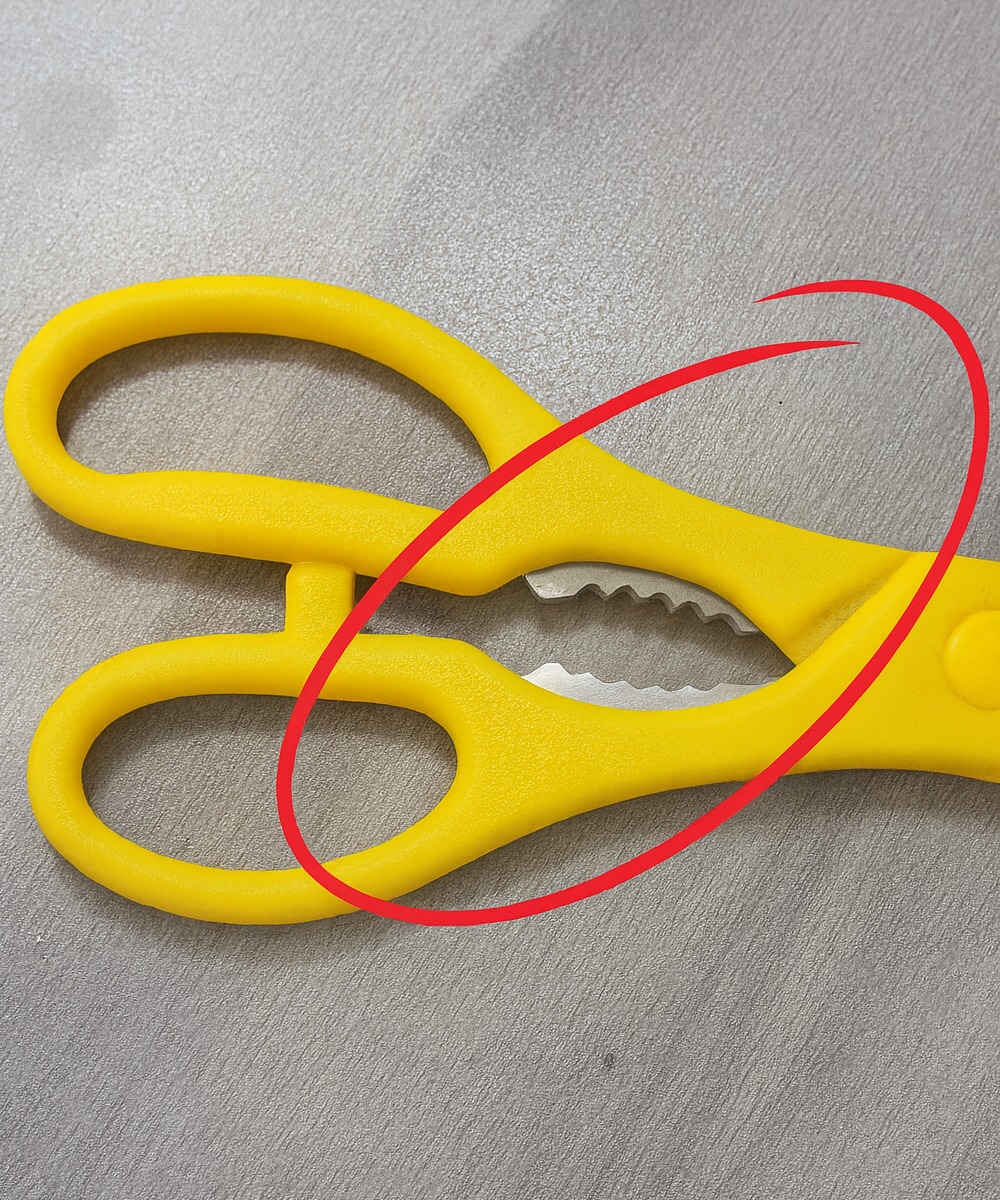
Have you ever noticed that jagged, tooth-like section hidden between the handles of your kitchen scissors, right behind where your fingers rest? You may have wondered what it’s for. If you’ve never used this little feature, you’re not alone. Many people think it’s just decorative or unnecessary.
But in reality, that serrated part is a surprisingly practical built-in tool. It’s not a mistake or a gimmick—it’s a clever design element that can make life much easier in the kitchen. Let’s explore what it does, how to use it, and why you should pay more attention to it next time you grab your scissors.
First Things First: What Is It?
That ridged area is often called a jar opener, nut cracker, or bone gripper, depending on the brand. But simply put, it’s a grip device.
You’ll find it where the handles curve inward. Sometimes it’s made of metal; sometimes it’s reinforced plastic. When you close the scissors slightly, the grooves interlock and create a powerful gripping surface that prevents objects from slipping.
Think of it as the “silent partner” of your kitchen scissors—always ready to give you extra traction when needed.

Tip #1: Open Stubborn Jars and Bottles
We’ve all been there—standing in the kitchen, struggling with a jar lid that refuses to turn. Maybe you’ve tried tapping it or wrapping it in a towel. Nothing works.
Here’s where the built-in gripper shines:
-
Close the scissors just enough so the teeth meet.
-
Place the jar lid between the ridges.
-
Hold the scissors in one hand and the jar in the other.
-
Twist.
The grooves help grab onto the lid, while the leverage spreads the pressure evenly. Suddenly, that stuck lid doesn’t feel so impossible anymore. This works for small bottle caps, too—like soda or sauce bottles.
For anyone with limited hand strength or arthritis, this feature can be a real lifesaver.
Tip #2: Crack Nuts Without a Nutcracker
No nutcracker in the house? No problem. This serrated handle can help crack walnuts, pecans, hazelnuts, and more.
Here’s how:
-
Place the nut in the grooved slot.
-
Press the handles gently until the shell cracks.
-
Rotate the nut and repeat until the shell loosens.
The key is patience—don’t squeeze too hard. The goal is to break the shell, not crush the nut inside. It may not be as fancy as a proper nutcracker, but it gets the job done when you need it.
Tip #3: Break Small Poultry Bones
If your scissors are heavy-duty (like poultry shears), the ridged part can help grip and break small chicken bones, such as wings, thighs, or drumsticks.
Just hold the bone in the serrated area, apply steady pressure, and let the grooves prevent slipping. Be sure to use a strong pair—lightweight scissors may not handle this task.
Bonus Uses You Might Not Know
This little notch can help in many other ways:
-
Crack crab legs or lobster shells for seafood dishes.
-
Open tough plastic caps on juice or milk containers.
-
Loosen synthetic bottle caps in a pinch.
-
Hold twist ties or plastic seals securely so you can cut them neatly.
Basically, if something is slippery, tough, or hard to grip, this feature can lend a hand.
Why Do Manufacturers Add It?
For Complete Cooking STEPS Please Head On Over To Next Page Or Open button (>) and don’t forget to SHARE with your Facebook friends.