2. Evergreen Trees and Shrubs
Evergreens like pines, spruces, boxwoods, and hollies retain their foliage year-round. Their metabolism is slower, but they still photosynthesize during winter.
- Best pruning time: Late spring or early summer, after new growth has emerged.
- Avoid cutting into bare “dead zones” on conifers – they rarely regrow from old wood.
Understanding your plant’s growth pattern is crucial because pruning at the wrong time can remove next year’s blooms or stunt its recovery.
The Best Time to Prune Trees and Shrubs
Timing can make or break your pruning efforts. Here’s a seasonal breakdown to help you plan.
Late Winter to Early Spring – Dormant Pruning
This is the safest and most productive time to prune most trees and shrubs. With leaves gone, the structure is easy to see, and new growth quickly seals pruning wounds.
Ideal for: Maple, oak, apple, pear, rose of Sharon, viburnum, spirea, and most deciduous species.
Benefits:
- Reduces disease risk
- Stimulates new growth
- Shapes the plant before active growth begins
After Flowering – For Spring and Summer Bloomers
Many flowering shrubs bloom on “old wood” – branches formed during the previous growing season. Pruning too early cuts off next year’s flower buds.
Best practice: Wait until flowering ends, then prune lightly.
Ideal for: Lilac, azalea, rhododendron, forsythia, and weigela.
Tip: Pruning right after blooms fade allows enough time for new growth to set buds for the following year.
Mid to Late Summer – Light Touch-Ups
Use this period for maintenance pruning: shaping, trimming, or removing stray growth. Avoid heavy pruning – late cuts can trigger soft new growth that winter frost will damage.
Ideal for: Boxwood, yew, hydrangeas (reblooming types), and ornamental shrubs.
Tip: Focus on air circulation rather than aggressive shaping. Gentle thinning works better than shearing.
Fall – Proceed with Caution
Fall pruning can do more harm than good. Cutting stimulates growth that won’t have time to harden before freezing weather, leaving the plant vulnerable to dieback or disease.
Only prune in fall if:
- You’re removing dead or damaged wood.
- A branch poses a safety hazard.
Otherwise, wait until late winter to resume major pruning.
Step-by-Step Guide: How to Prune Trees and Shrubs Correctly
1. Gather the Right Tools
Having clean, sharp tools ensures clean cuts and minimizes plant stress.
- Bypass pruners: For small branches under ¾ inch.
- Loppers: For branches up to 2 inches.
- Pruning saw: For thick or woody limbs.
- Pole pruner: For high branches (always use with care).
Pro Tip: Disinfect your tools between plants – especially after cutting diseased material – using rubbing alcohol or a bleach solution.
2. Define Your Purpose Before You Cut
Ask yourself what you want to accomplish. Each type of pruning has a purpose:
- Maintenance pruning: Removing dead or diseased wood.
- Thinning: Improving light and airflow.
- Heading: Controlling size and shape.
- Rejuvenation: Renewing old or overgrown plants.
Knowing your goal helps prevent unnecessary cuts.
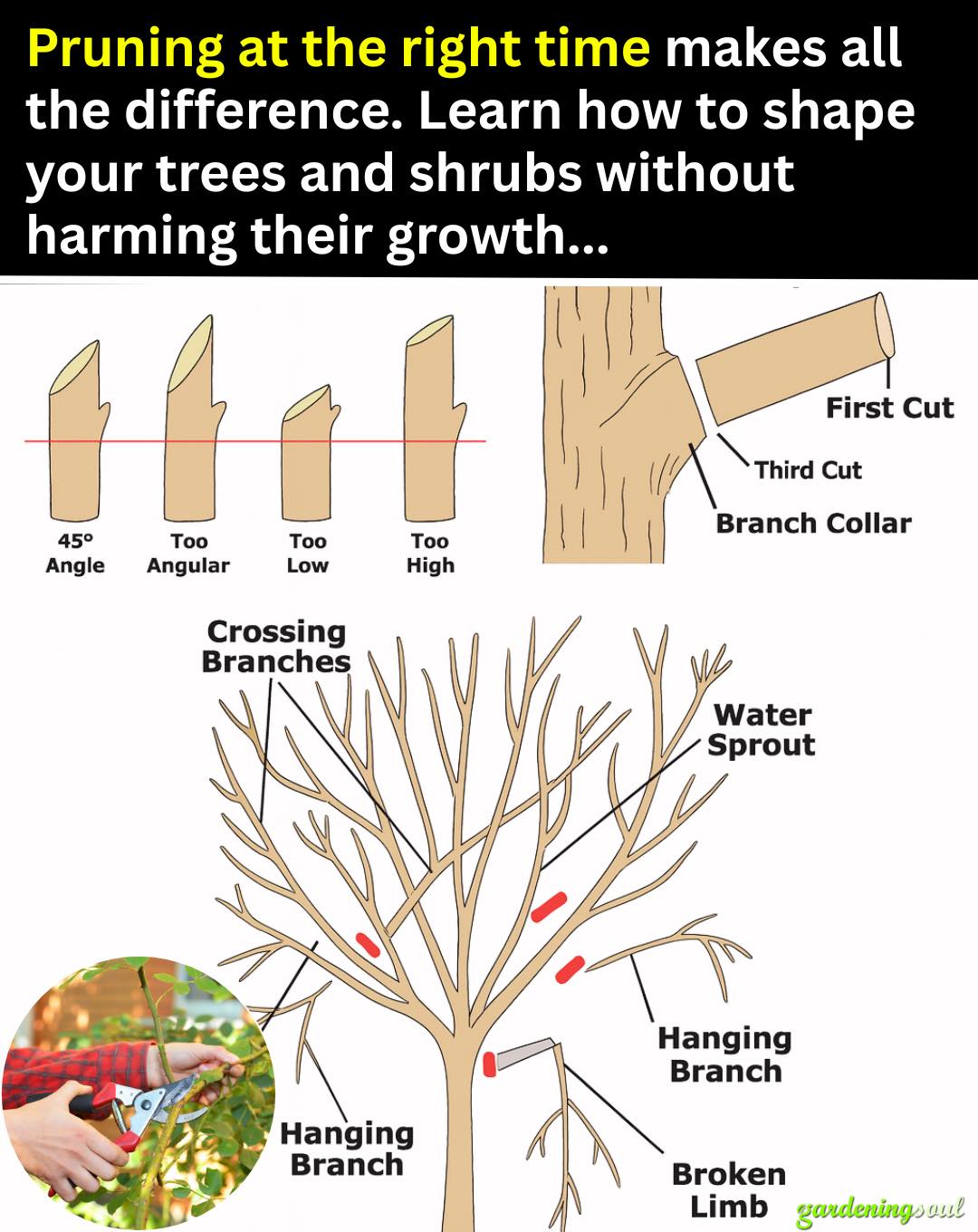
3. Identify the Right Branches to Remove
Take a few minutes to study your plant’s structure. Then, prioritize removing:
- Dead, brittle branches (no green tissue under bark).
- Diseased limbs with discolored spots or fungal growth.
- Crossing or rubbing branches that wound each other.
- Suckers and water sprouts (vigorous, unproductive shoots).
- Inward-growing or crowded branches blocking airflow.
Remember: Pruning should enhance natural form, not fight it.
4. Make Proper Cuts
For large branches, use the three-cut method to avoid tearing bark:
- Undercut: Make a small notch 6–8 inches from the trunk on the underside of the branch.
- Top cut: Move a few inches farther out and cut all the way through from the top.
- Final cut: Remove the remaining stub just outside the branch collar (the swollen area where branch meets trunk).
For shrubs or smaller stems, cut just above a healthy outward-facing bud at a 45° angle. This encourages outward growth and prevents inner crowding.
5. Shape and Thin Thoughtfully
When shaping, respect the plant’s natural form. Avoid “meatball trimming,” which can weaken structure and encourage disease.
- Thinning: Remove entire branches back to their point of origin for a natural look.
- Heading: Shorten stems to a bud or lateral branch to encourage new growth.
- Avoid topping trees: Cutting flat across main stems ruins shape and invites decay.
Pro Tip: For hedges and evergreens, taper the top narrower than the base to let sunlight reach lower foliage.
Special Pruning Tips by Plant Type
Fruit Trees
- Prune in late winter before buds swell.
- Remove vertical shoots, dead wood, and crowded branches.
- Keep the center open for sunlight and air circulation.
- Annual pruning enhances fruit size and quality.
Roses
- Prune hybrid teas and floribundas in early spring. Remove weak or crossing canes.
- Cut back one-third of the plant to rejuvenate growth.
- Deadhead spent blooms throughout summer to encourage more flowers.
Hydrangeas
- Bigleaf (Hydrangea macrophylla): Blooms on old wood – prune after flowering only.
- Panicle and Smooth types: Bloom on new wood – prune in late winter or early spring.
Evergreens
- Lightly prune in spring or early summer.
- Avoid cutting into leafless interior zones (they may not recover).
- Pinch new growth “candles” on pines to maintain compact shape.
Common Pruning Mistakes to Avoid
Even experienced gardeners can make pruning errors. Here’s what to watch for:
- Over-pruning: Removing more than 25% of the canopy in one go can shock the plant.
- Wrong timing: Pruning spring bloomers in winter eliminates next season’s flowers.
- Topping trees: Creates weak new shoots and permanent structural problems.
- Ignoring dead wood: Invites pests and disease.
- Dull or dirty tools: Cause jagged cuts that heal poorly and spread pathogens.
Rule of thumb: When in doubt, prune less, not more. You can always remove more later, but you can’t undo an overzealous cut.
Rejuvenation Pruning: Restoring Old or Overgrown Shrubs
If your shrubs have become leggy, woody, or bare at the base, rejuvenation pruning can breathe new life into them. There are three main methods:
1. Gradual Rejuvenation
Remove one-third of the oldest stems at ground level each year for three years.
Best for: Lilacs, forsythia, and spirea.
Result: Gradual renewal without sacrificing all blooms at once.
2. Hard Pruning
Cut the entire shrub back to 6–12 inches above the ground in late winter.
Best for: Dogwoods, potentilla, butterfly bush.
Result: Vigorous regrowth and compact shape.
3. Selective Renewal
Remove only a few of the oldest branches entirely while leaving younger ones intact.
Best for: Ornamental shrubs where shape preservation matters.
Pro tip: Always feed and water generously after rejuvenation pruning to support strong regrowth.
When Not to Prune
Avoid pruning during these conditions:
- Freezing weather: Cuts can’t heal and may cause frost damage.
- Drought or heat stress: Plants are already weakened.
- Pre-bloom period: Especially for spring-flowering shrubs – you’ll cut off buds.
- Late fall: New growth won’t harden before winter.
When in doubt, late winter pruning is usually the safest choice.
How Much Is Too Much?
A general rule: never remove more than 25% of a tree or shrub’s canopy in one season.
If a plant is severely overgrown, spread the rejuvenation process over two to three years. Slow, strategic pruning always yields healthier results than drastic cutting.
Pruning isn’t just a chore – it’s an act of stewardship. Each snip influences how your garden breathes, grows, and evolves.
By learning when and how to prune, you’re helping your plants live longer, bloom brighter, and stay resilient against pests and weather.
For Complete Cooking STEPS Please Head On Over To Next Page Or Open button (>) and don’t forget to SHARE with your Facebook friends.