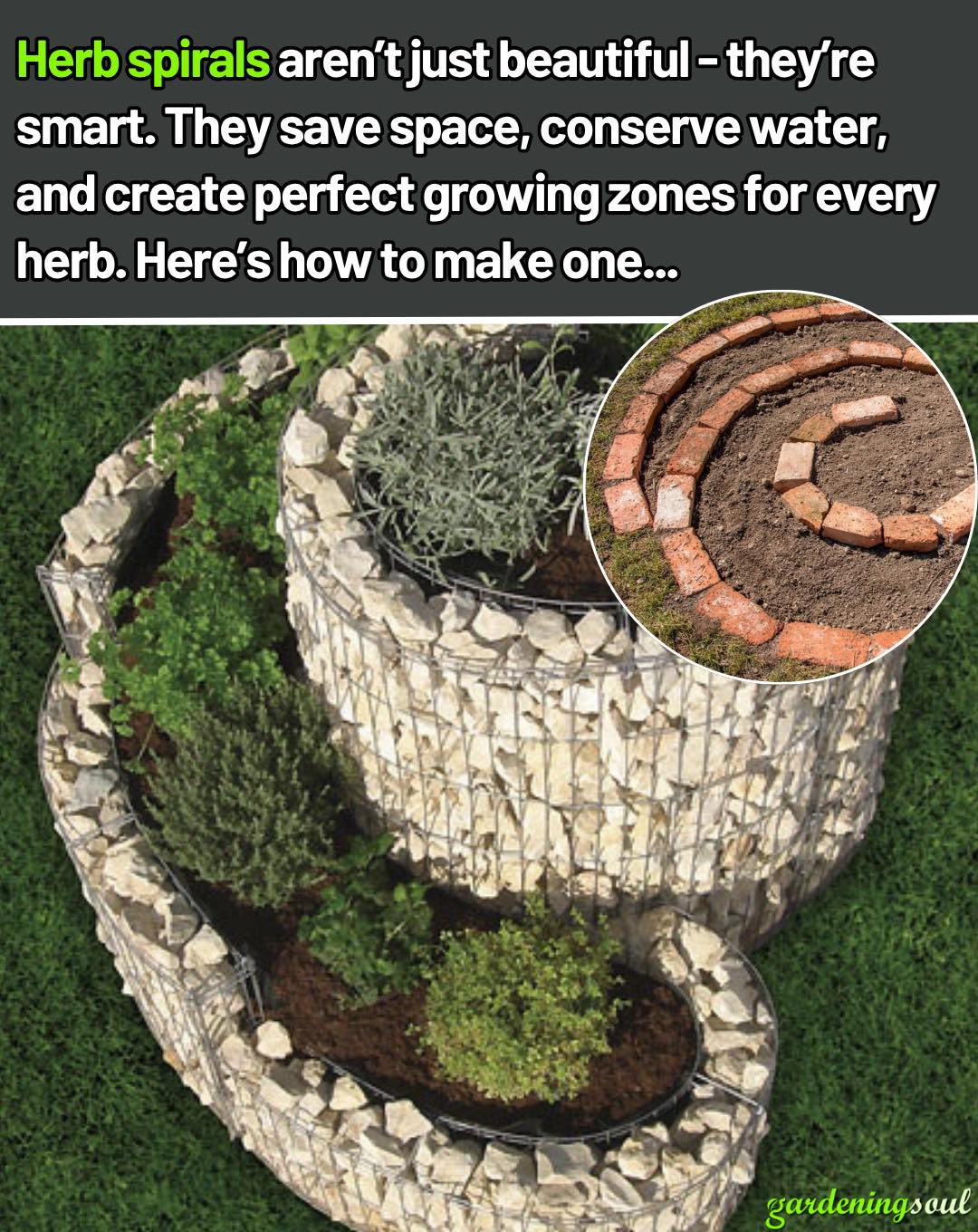
Imagine stepping into your garden and harvesting a handful of fragrant herbs – thyme, basil, rosemary – right from a single, stunning centerpiece.
That’s the beauty of an herb spiral, a permaculture-inspired vertical garden design that makes growing herbs both practical and beautiful.
Whether you’re short on space or seeking a unique garden feature, an herb spiral is a brilliant solution.
What Is An Herb Spiral?
An herb spiral is a spiral-shaped raised bed, usually constructed from stone, brick, or other durable materials, that winds upward like a snail shell.
The design creates microclimates, using height and orientation to offer different sun, shade, moisture, and drainage zones – all in one compact footprint.
It’s a classic permaculture technique that makes smart use of vertical space and mimics natural landscapes to support diverse plant life.
8 Reasons To Create An Herb Spiral
1. Efficient Use of Space
One of the biggest challenges for gardeners is space – especially urban gardeners or those working with patios and small yards.
An herb spiral transforms a small horizontal footprint into multiple layers of planting area. A typical spiral just 3-6 feet wide provides enough room to grow dozens of herb varieties.
Instead of scattering herbs across separate beds, you concentrate them vertically, freeing up ground space for other crops.
Bonus: The height makes harvesting easier, so no more bending over for every sprig of parsley!
2. Diverse Microclimates in One Bed
This is where the herb spiral truly shines.
- Top of the Spiral: Hot, sunny, and well-drained. Perfect for Mediterranean herbs like rosemary, oregano, and thyme.
- Middle Zones: Moderate moisture and sun levels, suitable for herbs like sage, chives, or coriander.
- Base of the Spiral: Shadier and moister, ideal for parsley, mint, and basil.
By creating these zones, you can grow a wider variety of herbs than you’d manage in a flat bed with uniform conditions.
3. Improved Drainage
Excess water can be devastating for herbs that prefer dry conditions. In an herb spiral, water naturally trickles downward through the soil layers.
The top remains well-drained, while the base retains more moisture—a perfect match for different herbs’ needs.
This natural water distribution means less overwatering and fewer issues with root rot.
4. Aesthetically Beautiful Garden Feature
An herb spiral isn’t just practical – it’s stunning. Whether crafted from rustic stone, modern brick, or reclaimed materials, the spiral shape is a living sculpture in your yard.
It creates a focal point, adding visual interest and texture to gardens of any size. It’s a talking point for visitors and a lovely way to showcase your gardening creativity.
5. Supports Pollinators and Biodiversity
Many herbs produce flowers that attract pollinators like bees, butterflies, and beneficial insects.
By planting a variety of herbs together in a spiral, you’re creating a mini ecosystem that supports local wildlife.
Beneficial insects help keep pest populations in check, reducing the need for chemical interventions and promoting a healthier garden overall.
For Complete Cooking STEPS Please Head On Over To Next Page Or Open button (>) and don’t forget to SHARE with your Facebook friends.