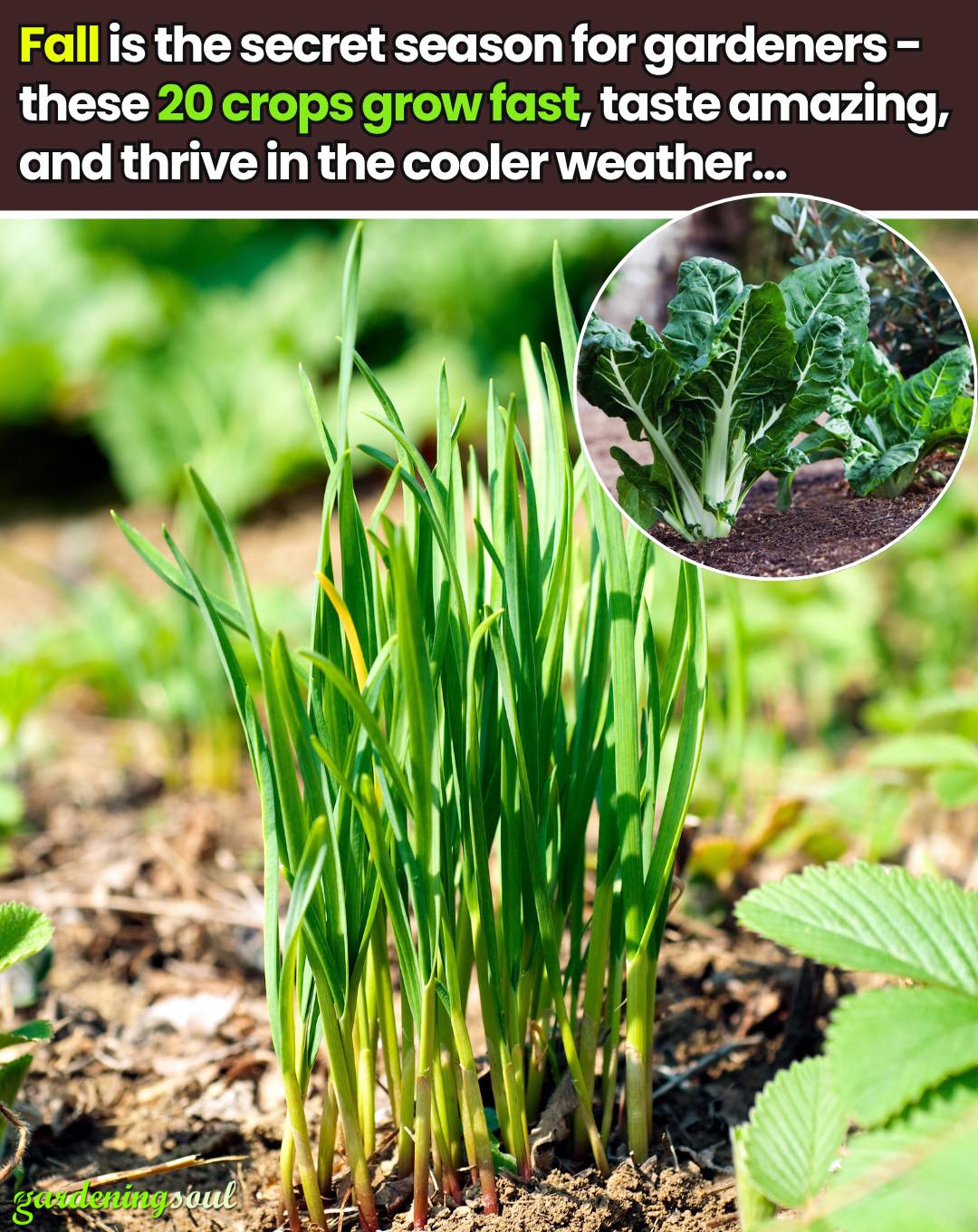
As the cooler temperatures of autumn roll in, many gardeners assume the growing season is winding down.
The days grow shorter, the air becomes crisp, and summer crops like tomatoes, cucumbers, and peppers begin to fade. But contrary to popular belief, fall is one of the best times to grow vegetables.
The soil, still warm from summer, encourages quick germination. Rain is often more frequent, which reduces watering needs.
Fewer pests linger, and cool nights discourage disease. Best of all, many crops taste sweeter after a light frost, because cold weather causes plants to convert starches into natural sugars.
1. Spinach – The Sweet Green of Autumn
Why Spinach Thrives in Fall
Spinach is one of the hardiest greens, flourishing in cool weather. Unlike lettuce, it can handle frost, and the colder it gets, the sweeter it tastes.
Planting Guide
- When to plant: 6–8 weeks before the first frost.
- How to plant: Direct sow seeds ½ inch deep in well-drained soil. Thin seedlings to 3–4 inches apart.
- Light: Full sun to partial shade.
Harvest & Storage
Spinach can be harvested as baby greens in as little as 30 days or left to mature for larger leaves.
Pick the outer leaves to encourage continuous production. Store fresh leaves in a damp paper towel inside the fridge for up to a week.
Bonus Tip
Cover with row covers to keep spinach producing into early winter.
2. Kale – Frost’s Favorite Leafy Green
Why Kale Is Perfect for Fall
Kale is a superfood that actually improves in flavor after frost, losing bitterness and gaining sweetness. Some gardeners keep kale alive all winter with a little protection.
Planting Guide
- When to plant: 6–8 weeks before frost.
- Spacing: 12–18 inches apart.
- Light: At least 6 hours of direct sun.
Harvest & Storage
Pick outer leaves continuously, or harvest whole plants when mature. Kale can last in the garden even under snow. Refrigerate in a produce bag for up to 10 days.
Bonus Tip
Try cold-hardy varieties like ‘Winterbor’ or ‘Red Russian’ for extended harvests.
3. Lettuce – Quick, Tender, and Reliable
Why Lettuce Belongs in Fall
Fast-growing and versatile, lettuce thrives in cool air. Unlike summer, fall planting avoids bolting (premature flowering).
Planting Guide
- When to plant: 4–6 weeks before frost.
- Spacing: 6–12 inches depending on variety.
- Light: Full sun to partial shade.
Harvest & Storage
Harvest baby leaves in 30 days, or let heads mature in 45–60 days. Store washed leaves in a container with a damp cloth.
Bonus Tip
Plant successions every 2 weeks for a steady supply.
4. Radishes – The 3-Week Wonder
Why Radishes Are Great in Fall
Radishes grow lightning fast – just 20–30 days from seed to harvest. They thrive in cool soil, producing crisp, peppery roots.
Planting Guide
- When to plant: 4–6 weeks before frost.
- How: Sow directly in loose, well-drained soil. Thin seedlings to 2 inches apart.
Harvest & Storage
Harvest promptly when roots are about 1 inch across to prevent woody texture. Store in a bag in the fridge for up to 2 weeks.
Bonus Tip
Sow new seeds every 10 days for continuous harvest.
5. Carrots – Sweetened by Frost
Why Carrots Love the Cold
Carrots planted in fall develop sweeter flavors as starches convert to sugars in frosty weather.
Planting Guide
- When to plant: 10–12 weeks before frost.
- How: Sow directly in loose, stone-free soil. Thin seedlings to 2–3 inches apart.
Harvest & Storage
Carrots mature in 70–80 days. Leave some in the ground under mulch for winter harvest. Store harvested carrots in sand or sawdust in a cool cellar.
Bonus Tip
Try rainbow carrot varieties for extra fall color.
6. Beets – Roots and Greens Together
Why Beets Work in Fall
Beets offer two crops in one: edible roots and leafy greens. Cool weather makes both sweeter and more tender.
Planting Guide
- When to plant: 6–8 weeks before frost.
- Spacing: Sow 1 inch apart, thin to 3 inches.
Harvest & Storage
Harvest roots at 2–3 inches wide. Beet greens can be harvested at any time. Store roots in a cool, damp environment for months.
Bonus Tip
Roast beets with fall herbs for a hearty side dish.
7. Swiss Chard – Resilient and Colorful
Why Chard Belongs in Your Fall Garden
Chard is tougher than spinach, tolerating light frost. It also adds ornamental beauty with its rainbow-colored stems.
Planting Guide
- When to plant: 6–8 weeks before frost.
- Spacing: Thin to 12 inches.
Harvest & Storage
Harvest outer leaves continuously. Store in the fridge for up to 1 week.
Bonus Tip
Plant ‘Bright Lights’ chard for stunning porch or garden displays.
8. Broccoli – The Cool-Weather Brassica
Why Broccoli Belongs in Fall
Broccoli heads form best in consistent cool weather. Heat stresses plants, but fall planting ensures tighter, tastier florets.
Planting Guide
- When to plant: 10–12 weeks before frost.
- Spacing: 18–24 inches apart.
Harvest & Storage
Cut central heads when firm. Plants produce side shoots afterward. Refrigerate for up to a week or blanch and freeze.
Bonus Tip
Cover with row cloth to deter cabbage worms.
9. Cauliflower – The Tricky but Rewarding Crop
Why Fall Helps Cauliflower
Cauliflower needs steady, cool temps to form proper heads. Fall weather provides just that.
Planting Guide
- When to plant: 10–12 weeks before frost.
- Spacing: 18–24 inches apart.
Harvest & Storage
Harvest heads when firm and compact. Store in fridge for 1 week.
Bonus Tip
Tie leaves over heads to keep them white (“blanching”).
10. Brussels Sprouts – Best After Frost
Why Brussels Sprouts Shine in Fall
Brussels sprouts require a long, cool growing season. Frost makes them sweeter and nuttier.
Planting Guide
- When to plant: 12–14 weeks before frost.
- Spacing: 24 inches apart.
Harvest & Storage
Pick sprouts from the bottom up as they mature. Store in the fridge for up to 2 weeks.
Bonus Tip
Roast with olive oil for caramelized sweetness.
11. Cabbage – Crisp and Cold-Resistant
Why Fall Is Ideal
Cabbage thrives in crisp fall air, forming dense, crunchy heads.
Planting Guide
- When to plant: 6–8 weeks before frost.
- Spacing: 12–18 inches apart.
Harvest & Storage
Harvest tight heads. Store in cool storage for months.
Bonus Tip
Plant red cabbage for color and storage longevity.
12. Turnips – Dual Harvests
For Complete Cooking STEPS Please Head On Over To Next Page Or Open button (>) and don’t forget to SHARE with your Facebook friends.