When the crisp air of October arrives and leaves begin to fall, most people think gardening season is coming to an end.
But for gardeners in the know, October is one of the most important planting months of the year – especially for bulbs.
Planting bulbs in fall allows them to establish roots before winter’s chill sets in, so they can burst into vibrant blooms come spring.
Why Plant Bulbs in October?
Planting bulbs in October offers several natural advantages:
- Warm soil, cool air: Roots grow best in soil that’s still warm while foliage stays cool.
- Moisture advantage: Autumn rains help bulbs settle without the need for daily watering.
- Perfect dormancy timing: Many bulbs require a cold period to trigger blooming – planting in fall gives them months of natural “chill time.”
- Fewer pests: Cooler weather means less insect activity nibbling at bulbs.
- Effortless spring payoff: A few hours of autumn planting reward you with months of spring color.
Ideal planting time: When daytime temperatures stay below 60°F (15°C) and before the ground freezes – typically mid-October through early November, depending on your zone.
1. Tulips (Tulipa spp.)
Zones: 3–8
Sun: Full
Bloom time: Mid to late spring
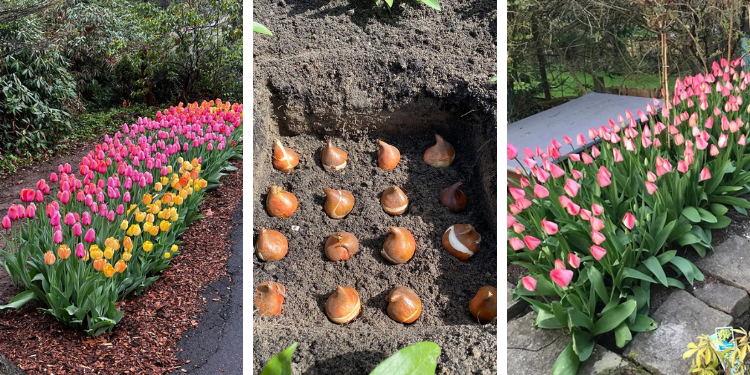
No bulb says “spring” quite like tulips. From soft pastels to fiery reds and oranges, tulips bring bold color to any garden.
Planting Tips
- Plant bulbs 6–8 inches deep in well-draining soil.
- Space 4–6 inches apart.
- For a natural look, plant in clusters rather than straight rows.
- Add bone meal or bulb fertilizer at planting time for strong root growth.
Pro Tip: In warmer zones, refrigerate tulip bulbs for 6–8 weeks before planting to ensure proper chilling.
2. Daffodils (Narcissus spp.)
Zones: 3–9
Sun: Full to partial
Bloom time: Early to mid-spring
Cheerful and resilient, daffodils are among the easiest bulbs to grow – and deer leave them alone thanks to their natural toxicity.
Planting Tips
- Plant bulbs 6 inches deep, with the pointed end up.
- Space 3–6 inches apart in clusters.
- Daffodils naturalize beautifully, returning bigger and better each year.
Varieties to try: ‘Carlton’ for classic yellow, or ‘Thalia’ for elegant white blooms.
3. Hyacinths (Hyacinthus orientalis)
Zones: 4–8
Sun: Full to partial
Bloom time: Mid-spring
Few flowers can rival the intoxicating fragrance of hyacinths. Their dense spikes of flowers look stunning in borders, containers, or near entryways.
Planting Tips
- Plant 4–6 inches deep and 4 inches apart.
- Handle bulbs with gloves – the outer coating can irritate skin.
- Mix with daffodils and tulips for a layered bloom effect.
Bonus: Hyacinths can also be forced indoors in winter for fragrant indoor displays.
4. Crocus (Crocus vernus)
Zones: 3–9
Sun: Full to partial
Bloom time: Late winter to early spring
Crocuses are among the first blooms of spring, often pushing through snow. Their bright purple, yellow, or white flowers are a welcome sight after a long winter.
Planting Tips
- Plant bulbs 3 inches deep and 3 inches apart.
- Ideal for rock gardens, lawns, or under deciduous trees.
- They naturalize easily, creating colorful carpets over time.
Try: Saffron crocus (Crocus sativus) for edible saffron threads if your climate is mild.
5. Alliums (Allium spp.)
Zones: 4–9
Sun: Full
Bloom time: Late spring to early summer
These striking ornamental onions produce globe-shaped clusters of purple, pink, or white flowers that tower over the garden and attract pollinators.
Planting Tips
- Plant 4–8 inches deep, depending on bulb size.
- Space 8–10 inches apart.
- Combine with early perennials to fill the space once alliums fade.
Best picks: ‘Globemaster’ and ‘Purple Sensation’ for dramatic garden displays.
6. Snowdrops (Galanthus nivalis)
For Complete Cooking STEPS Please Head On Over To Next Page Or Open button (>) and don’t forget to SHARE with your Facebook friends.